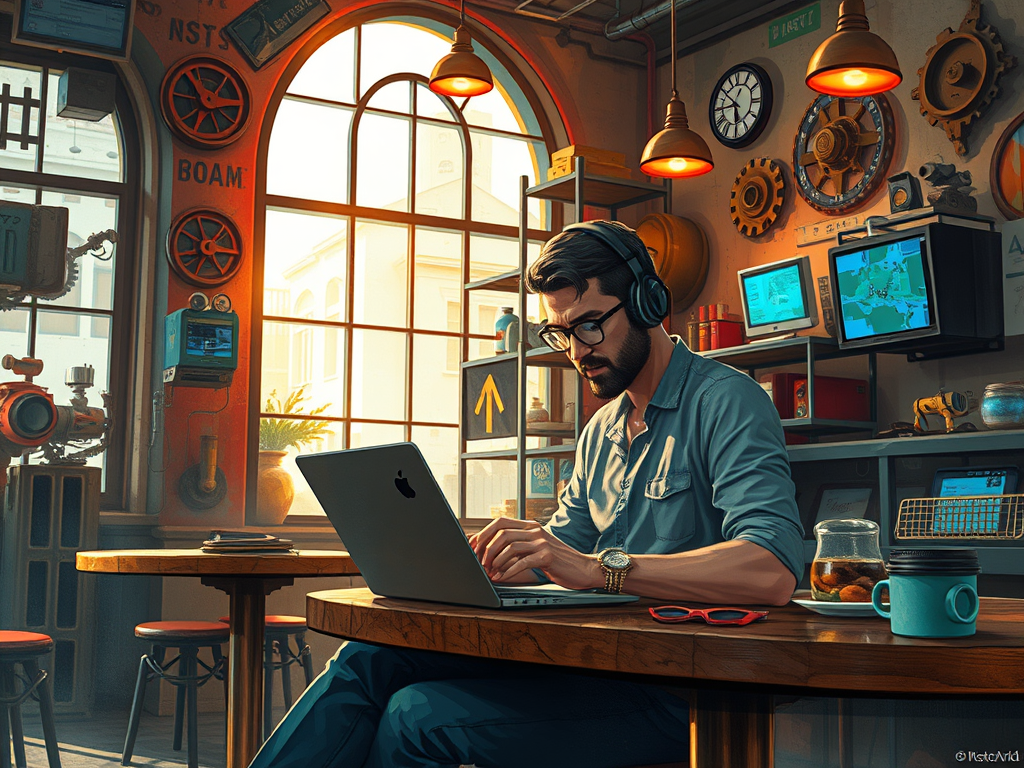
The conversation surrounding AI is dominated by one looming fear: the displacement of the human worker. It’s a familiar anxiety. The First Industrial Revolution was a chaotic reshuffling of sectors that—despite the “growing pains” of two world wars—eventually left humanity better off.
However, the most lasting legacy of that era wasn’t just the machinery; it was the urbanization of the human soul.
The Infrastructure of Life
Everything we recognize as a “modern lifestyle” was forged in the soot of the 19th century. The eight-hour workday, the five-day week, the institutionalized school system, the regular paycheck, and the annual holiday—these are all relics of an industrial shift that moved people from villages to cities. We are still living inside the social architecture built for the steam engine.
The Rise of the Avatar
The advent of the World Wide Web and social media triggered a new migration. Instead of moving to a city, a new elite class moved to the “cloud.”
These digital nomads managed to bifurcate their existence. They separated their productive life (online) from their private life (offline). In a sense, they split themselves into multiple avatars—highly efficient workers in the digital realm who are never quite 100% present in the physical world they actually inhabit.
The AI Incursion
This is the backdrop for the current revolution. While no one knows exactly which jobs AI is “coming for,” it is logical to assume that because AI is a digital-native entity, it will first occupy the digital-only spaces.
Most “real world” jobs involve a messy cocktail of tasks that remain beyond the reach of an algorithm. Even the most high-powered lawyers still have to:
- File physical paperwork in a mahogany-clad basement.
- Take a panicked client to lunch.
- Look a jury in the eye.
These “human-to-human” tasks will see a massive spike in perceived value. We may even see a global improvement in service quality as humans lean into the roles that AI cannot replicate: empathy, physical presence, and manual navigation of the physical world.
The Vulnerability of the Nomad
The irony, however, is that the digital nomad is the easiest to replace.
By streamlining their professional lives into a purely digital interface, they have inadvertently made themselves indistinguishable from an AI. If your entire contribution to society is delivered via a screen, a Slack channel, or a code repository, you are speaking the AI’s native language.
The digital nomad’s interface with society is already identical to the one AI uses. And in the world of the digital-only, the most efficient avatar wins.


Leave a Reply