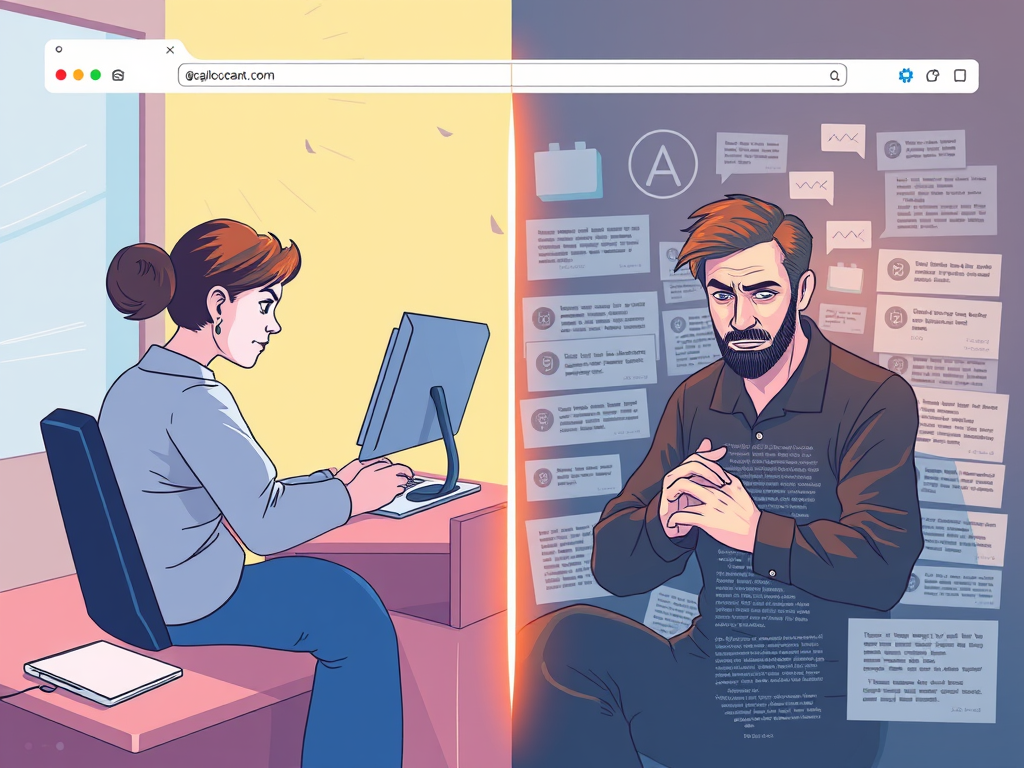
Today, the “browser wars” aren’t fought with billboard ads—they are fought in the split seconds of an individual user’s workflow. In this case, that user is me.
My digital life is split between two worlds: Safari for work and Atlas for home. Lately, I’ve noticed a growing friction in Atlas. About half the time I look for something, I find myself wishing for a “Classic Google” experience. Instead, I’m met with a mandatory ChatGPT response that makes me stop, close the tab, and start over.
Here is why the “AI-first” default is starting to feel like a hurdle rather than a help.
1. Google as the “Yellow Pages”
Half the time, I already know exactly what the result will look like. I know I am only one click away from the finish line. Whether it’s the homepage of a local store, a specific Wikipedia entry, or a login page, I don’t need a digital assistant.
In these moments, Google is my power tool—a bigger hammer that is an extension of my own intent. Waiting three seconds for ChatGPT to “compile” a long-form answer (which may or may not actually include the link I need) feels like a step backward in efficiency.
2. Speculative vs. Navigational
The other half of the time, my queries are more speculative. I don’t know the solution yet, and I need a “brain” to help me synthesize information. For these cases, the AI response is brilliant.
However, Google’s own AI summaries have become remarkably good. If I hadn’t already moved my personal life into Atlas by the time Google rolled those out, I’m not sure I ever would have switched.
3. The Power of Inertia
This brings up an interesting point for the long-term success of OpenAI. If Google continues to improve its AI summaries at this pace, I predict the challengers will struggle to gain a permanent foothold. We shouldn’t underestimate the sheer inertia of the Google user base—it’s the same reason people never really left Microsoft Office. Habit is a powerful moat.
4. The “Search Guilt”
There’s also a new kind of modern guilt: The CO2 of a “Wall of Text.” Every time I accidentally trigger a massive LLM response for a query that could have been a simple link, I feel a pang of guilt for the wasted energy.
We are currently nearing “Peak Search War.” My hope for the end of 2026 is that our tools become “context-aware”—smart enough to know when I need an AI architect and when I just need the Yellow Pages.
Fun Fact: For the longest time, the most frequently Googled term was… drumroll… “Google.” I bet some users use it in Atlas these days. Some habits truly never die.


Leave a Reply